Introduction
Before I could tell time, I learned the clock by sound, the ute in the driveway, the closing of a pub door, the silence that followed. Those nights shaped the rhythm of my life long before I understood what fear was.
This story isn’t about revenge or blame. It’s about the quiet cost of cruelty and the long work of healing — how shame can live in your bones for decades, and how small acts of kindness and connection can start to undo it.
For years I believed the words that were spoken over me: you’re a bad egg, you’ll never amount to anything. They became the background noise of my days, the echo in my sleep. But this book is proof that words can be answered — that healing, though slow and uneven, is still possible. If you’ve ever carried someone else’s cruelty inside you, I hope these pages remind you that their story doesn’t have to be yours. Healing doesn’t erase the past; it just gives you a way to live beyond it.
I learned the clock by sound long before I could tell time. The pubs closed at ten; by ten-oh-five, his ute would grind up the drive, the sound of tyres on gravel sharp as teeth. Every muscle in me would pull tight, a kind of silent rehearsal for whatever came next. I’d run off to bed and try to make myself small, tucking my knees up as if I could fold myself out of sight, as if smallness might make me safe. Then came the waiting—the kind that fills the dark until it feels solid. The waiting felt like a weight you couldn’t shift, pressing down on your ribs until even breathing was an effort.
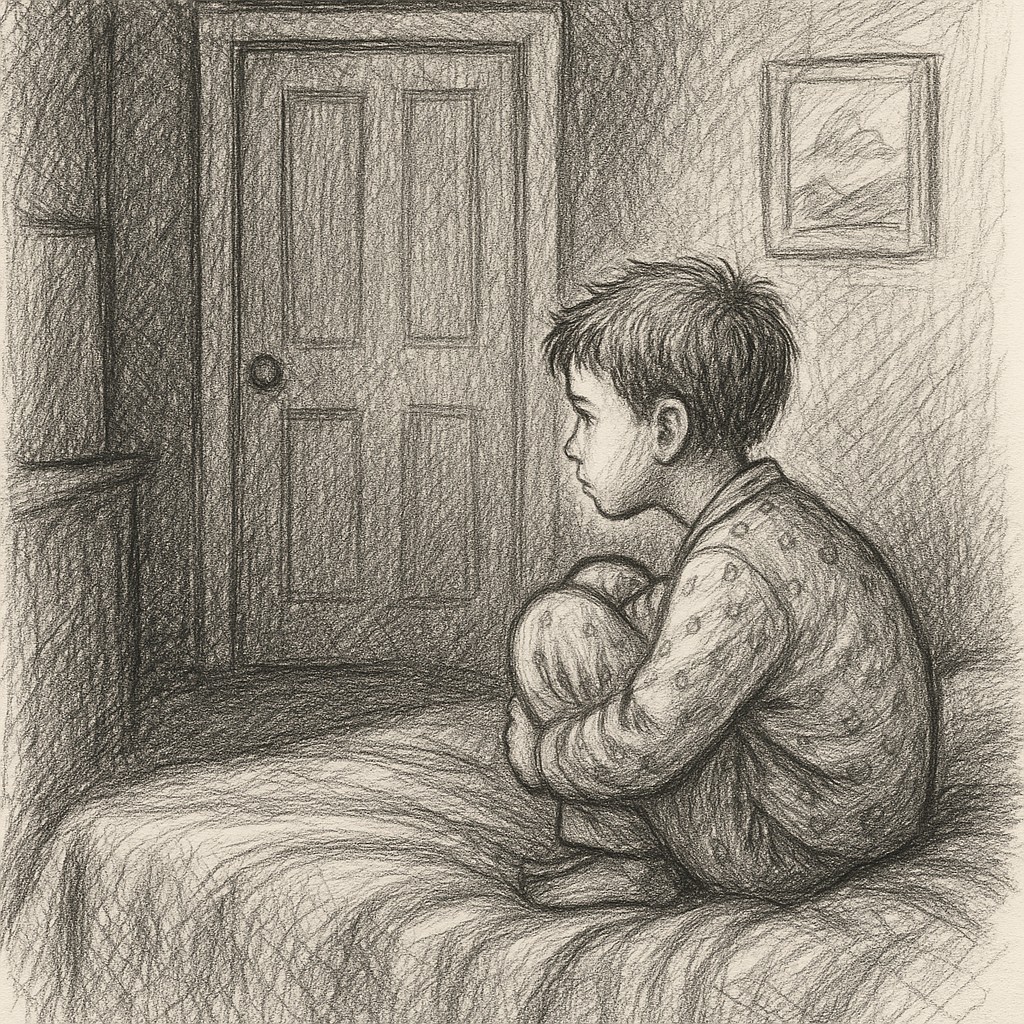
I’d stare at the back of the bedroom door until the lines blurred, counting the seconds like stitches—one, two, three—trying to hold myself together with numbers. The house would hum, the fridge ticking, the pipes whispering, and outside the night would move on without me. Inside, time stretched thin. Every noise could be him. The ute door slamming. The boots on the step. The latch of the screen door. Each sound carried its own kind of threat, and each one kept me pinned beneath the blanket, waiting for his shadow to reach my door.
If he caught me before I’d closed my eyes, he’d stand in the doorway, just looking. That look—half glassy, half mean—said more than words ever could. It was the kind of look that stripped the air from a room. I never knew what version of him was coming—the loud one, the quiet one, the one who liked to make me flinch. His eyes always found me, even in the dark. I learned not to move, not to speak, not even to blink, because any of it could be taken as defiance.
Then my name would come, low and sharp. “Oi,” he’d say, and the sound of it folded over me like cold water. He’d drag me to the lounge where the television hummed blue, and under that light, his stories would spill out—some mate’s tale from the pub, some lesson he thought I needed. A kid who stole. A kid who lied. A kid who got what was coming. None of it was ever about me, but he made sure it felt like it was. “You’re a bad egg,” he’d say, as if it were fact carved in stone. “You won’t amount to nothing.” The words stuck like burrs; no matter how I brushed them off, they clung.
Back in bed, the silence wasn’t peace—it was just the absence of noise before the thoughts started again. Sleep never came easy. I’d lie there for hours, eyes wide in the dark, heart thudding so hard it felt like it might shake the mattress. I’d replay his words, testing them for weakness, but they always held. “You’re nothing.” Over and over until the words hollowed out and left an ache behind. I tried to breathe past the fear lodged in my throat, to pretend I was anywhere else, anyone else. Some nights I prayed he’d be late; some nights I prayed he wouldn’t come home at all. The guilt for both wishes came the same. “I never knew what version of him was coming”
Years later, the sound of a ute still tightens something deep inside me. The memory of lying there—still, small, waiting—stays vivid, like a film I’ve watched too many times. But with age, the reel slows. The fear doesn’t vanish, but it changes shape. I learned to name it, to meet it without flinching. I learned that the look he gave me wasn’t truth—it was projection. And the words he threw were never prophecy. They were noise. The quiet that came after, that’s where I started to find myself again.
School should have been the place I could breathe, but it became another place where fear followed me. From the first day I picked up a pencil, the classroom felt like a test I was doomed to fail. No matter how hard I tried, the letters on the page refused to settle into sense. They danced and swapped places, like they were mocking me. Reading felt like chasing flies with a spoon—the words skittered just out of reach, and no amount of effort could pin them down. Writing was worse. My hand would tremble, scrambling for the right shapes, and the blank page stared back like it knew I didn’t belong there. I practiced in secret, tracing letters under the covers at night, whispering the sounds to myself so no one could hear. I believed if I just worked harder, I’d fix whatever was broken inside me. But the harder I tried, the more the shame grew.
By the time I reached my senior years, the fear of reading aloud or spelling in front of others had settled into my bones. I became an expert at hiding—sitting at the back of the room, hoping the teacher’s eyes would slide past me. Group work was torture. I’d pretend to take notes, nodding along, praying no one asked me to read them. My stomach would twist before English class, knowing there’d be another list of words to spell, another passage to read. The embarrassment wasn’t just a momentary flush—it was a daily reminder that I was different, that I didn’t fit the shape of what a “smart” kid was supposed to be. Every red mark on a paper felt like a public display of failure, each mistake confirming what I’d already been told at home.
My father’s voice never really left me. It lived on the edge of every school day, waiting to be proven right. “You’re a bad egg. You’ll amount to nothing.” Those words followed me into every classroom like an invisible tag, turning every stumble into evidence. When a teacher corrected me or a classmate laughed, it wasn’t just embarrassment—it was that voice coming back to life. I could almost feel the yellow lamplight of the lounge room again, his stare, the sting of his certainty. I envied the kids who could read smoothly, who filled pages without fear. They seemed to be built from words themselves—quick, confident, belonging. I felt made of something else entirely: hesitation, blanks, and the weight of being wrong.
“it was a daily reminder that I was different”
The nights and the school days fed each other like a loop I couldn’t escape. I’d lie awake for hours, staring at the door, afraid of what the night would bring, and by morning I’d drag that exhaustion to class like a second skin. Fatigue blurred the letters even more; by midday my head felt stuffed with fog. Homework stayed crumpled at the bottom of my bag, untouched, not from laziness but from dread. Teachers saw unfinished work and shook their heads. “You just need to try harder.” But I was trying—every night, every morning, every breath was effort. They couldn’t see that the real battle wasn’t on the page—it was in believing I had the right to keep trying at all.
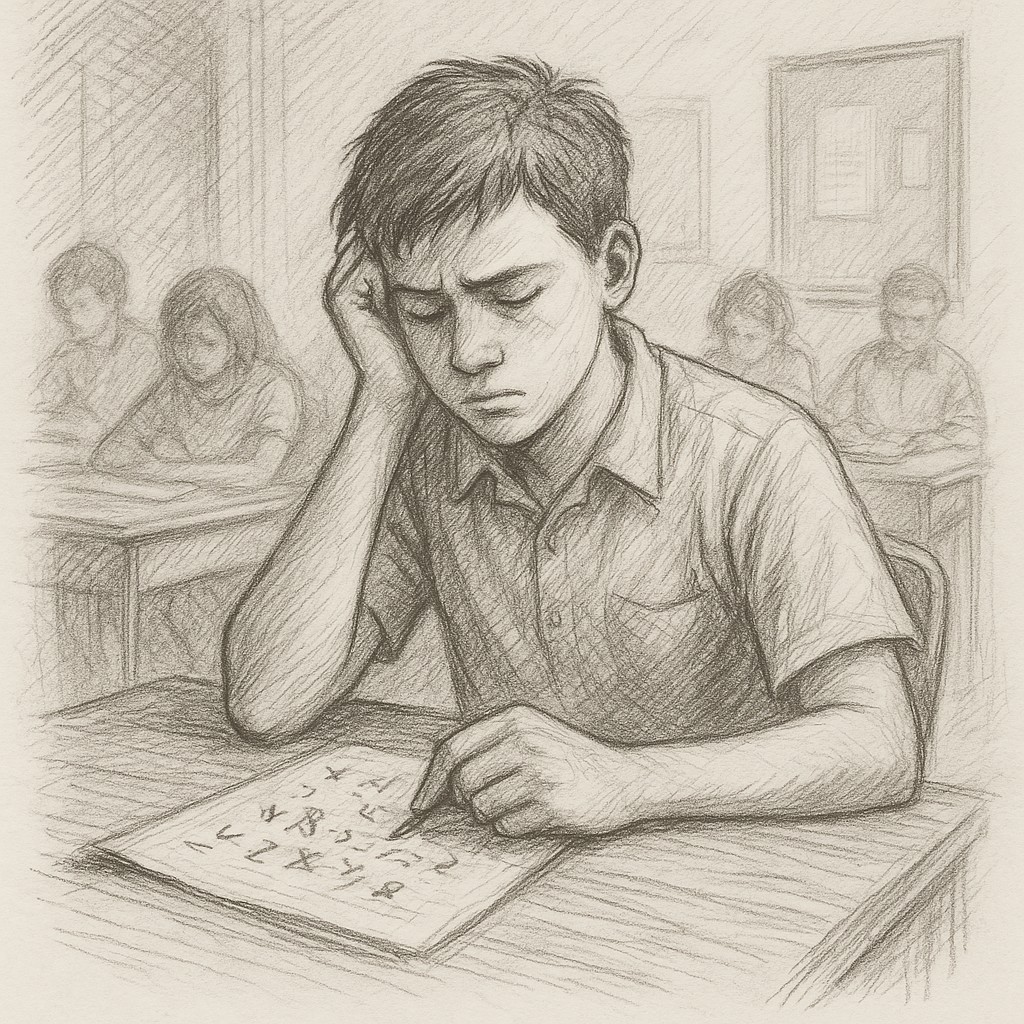
Looking back, I can see how shame hides the truth. I wasn’t stupid; I was struggling in silence. I didn’t know there were names for what I was going through—dyslexia, trauma, exhaustion. Back then, there was just me, the red pen, and the sinking feeling that I’d never be enough. Later in life, I learned that struggle doesn’t mean you’re broken, and that sometimes survival itself is a kind of education. Naming what was happening—calling it out instead of carrying it—was the start of taking the story back. The fear didn’t vanish, but it stopped being the teacher.
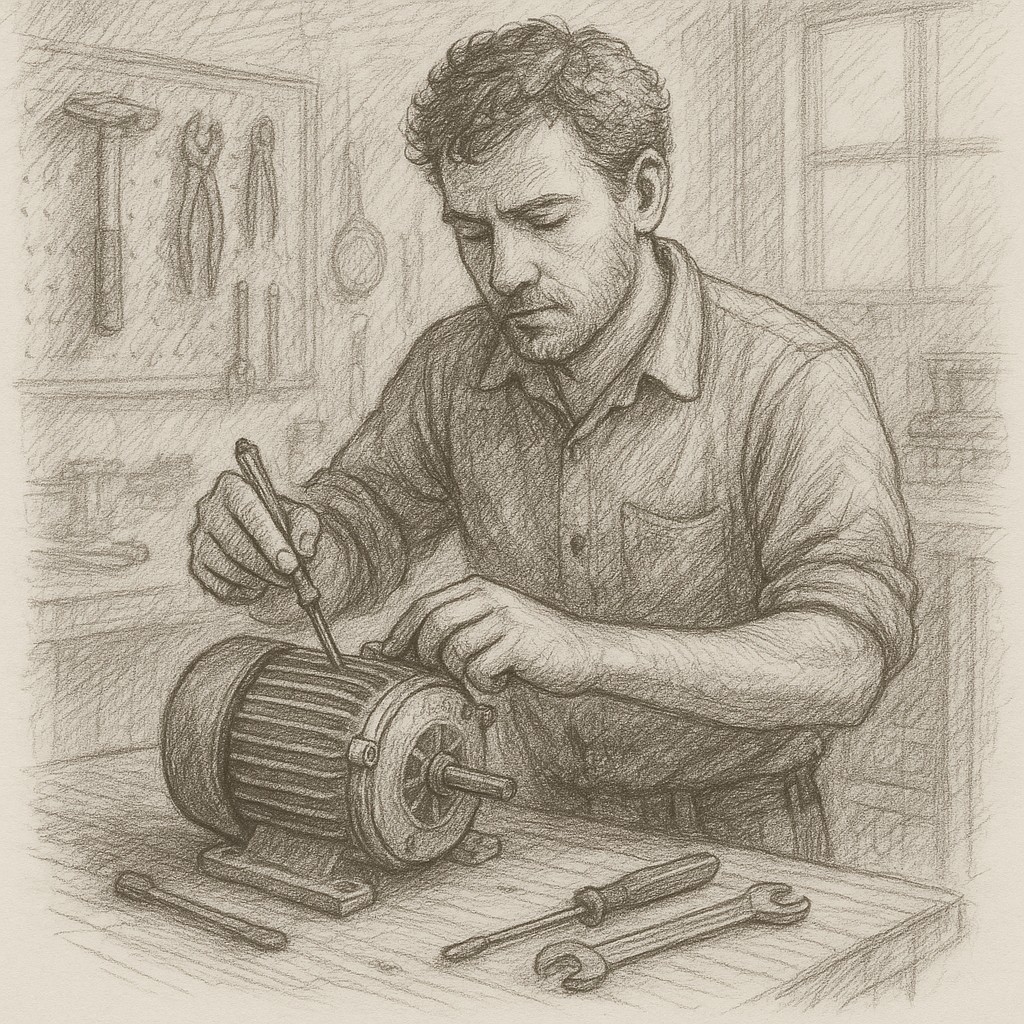
I’ve come to understand that while words were never my friends, my hands have always known what to do. I could learn anything if it involved touch, movement, making. Give me a broken thing and I’d work out how to fix it without needing instructions. Tools, engines, timber, paint—whatever it was, my hands spoke a language my mind didn’t have to translate. While letters scrambled on the page, shape and texture made perfect sense. I could see how something fit together before I even picked it up. Teachers might have called me slow, but put a task in front of me and I was the first to finish. That was my quiet rebellion—the one space where I could trust myself completely. I didn’t need words to prove I was capable. My hands did the talking, and they never lied.
After years of fear, my dreams have always been filled with that same fear. For as long as I can remember, I’ve been hunted in my sleep — chased by people I can’t quite see, or trapped in endless situations I can’t escape. The worst ones are the war dreams. I’ve never been to war, but in those dreams it’s always me alone against an army, usually German soldiers. Sometimes it’s not war at all, but a different kind of terror — the feeling that I’ve done something terrible, that I’ve killed someone, and that any moment now I’ll be caught. I never dream of the things that actually happened to me as a child. My dreams are only ever about fear itself — the shape it takes, the way it never leaves. The dreams don’t end when I wake up. They follow me into the day, clinging to me like smoke I can’t wash off. The fear feels real — gut-churning, heavy, sitting in my chest long after my eyes open. Sometimes I can still see the faces from the dreams, hear the sounds, feel the panic. It’s like they aren’t dreams at all but memories, even though I know they never really happened. The emotions are the same, though — the same helplessness, the same fear. It’s exhausting to start a day already feeling like I’ve survived something terrible.
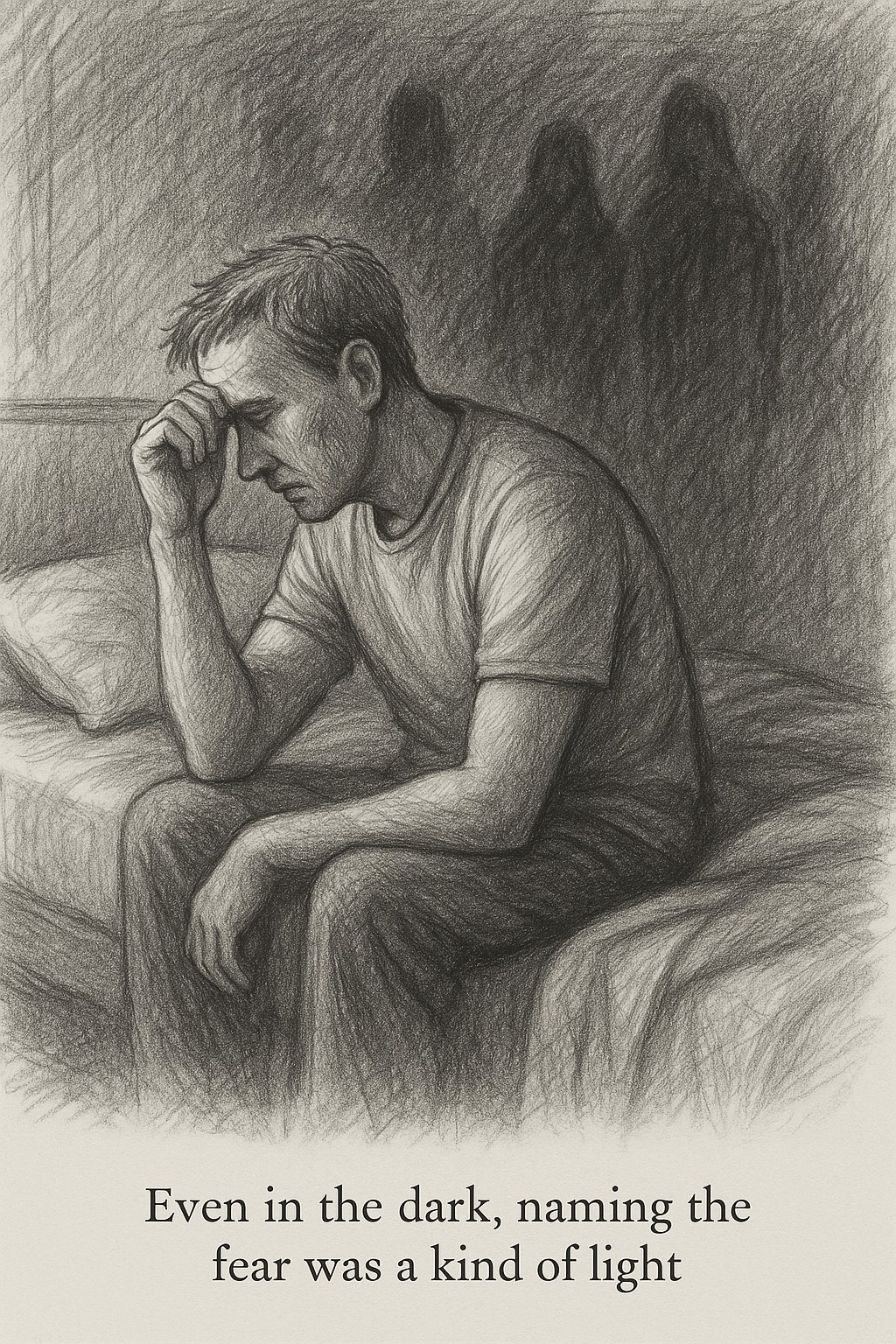
It’s strange to think how times have changed. Many years ago, I asked a doctor if there was something I could take to stop the dreams. I was desperate for rest — not just sleep, but peace. His reply was simple: “Dreaming is part of life. Everyone has them.” That was it. Back then, in the 1980s, they didn’t really talk about trauma the way they do now. I suppose they thought someone my age couldn’t have a problem with nightmares. There wasn’t even a name for what I was feeling, just a quiet sense that something was wrong with me. Now we know so much more about PTSD and how it can shape a person’s life — but at the time, I was just left to live with it, night after night.
Over the years, I’ve tried several medications for PTSD. One of them came by accident — it was originally prescribed for nerve pain. After a week or so, I noticed something different. I was still dreaming, but when I woke up, I couldn’t remember the dreams. For the first time in years, I wasn’t carrying that gut-churning fear into the day. It felt like a kind of peace.
About six months after starting that medication, I was diagnosed with a rare cancer. The doctors told me to stay on the medication to help with the after-effects of surgery, and for a while, I did. But eventually, it stopped working. The trauma of the diagnosis had brought everything back — the fear, the dreams, the sleepless nights. It was as if my mind had decided that peace was a luxury I no longer deserved.
I still go through it today. The dreams haven’t gone away—not really. When one of the big ones comes, it leaves me hollow for days. It’s not just tiredness—it’s the kind of exhaustion that seeps into the bones, like the fear itself has drained every ounce of energy. Some mornings, I wake up already fighting, my body awake but my mind still trapped in the dark room of the night before. I’ve learned to move gently through those days—to forgive the slowness, to let the small things count as victories. Because healing, I’ve learned, isn’t about erasing the past. It’s about living with what remains—finding moments of quiet between the echoes. “Dreaming is part of life. Everyone has them”
Now I’m sixty, and half of every thought I’ve ever had has been consumed by those few words: you’re a bad egg. They’ve sat in my head like stones in a pocket—heavy, clinking, impossible to ignore. . I’ve carried them through every decade, every home, every job. The fear is still there; it doesn’t roar like it did in my twenties, but it hums beneath the surface. It’s learned the long ways to hide. It shows itself in the smallest moments—the tremor in my hand when someone asks me to read aloud, the split second before I sign my name, the quiet panic that flares when I’m handed a form and there’s someone watching. They’re ordinary moments for most people, but for me, they open old wounds. My body remembers before my mind does. second-guessing how I spell my own words. It’s like part of me is still standing in that schoolroom, cheeks burning, waiting to be corrected.
Anxiety found ways to braid itself into the everyday. Reading instructions felt like stepping onto a stage; writing in front of someone felt like being measured. That old shame lingered, wearing new disguises— professional doubt, self-silencing, the need to overwork to prove worth. The look my father used to give me—the slow narrowing of his eyes, as if he was weighing whether I deserved to exist—still visits me sometimes. He’s been gone twenty years, but that expression lives on, stitched into the corners of memory.
There’s grief tangled in it—grief for the man I wished he’d been, and for the boy who thought he could earn love by being better. But there’s something else too: a kind of defiance. Because even with all that noise in my head, I’ve made things. Built them. Fixed them. Created something out of the mess. My hands have carried me through what words could not. And while the fear still whispers, it no longer gets to write the ending.
I realised, when I met my wife and saw how her family was, that my version of “normal” wasn’t normal at all. In her home, laughter came easy. Her father’s voice didn’t make people shrink—it filled the room with calm. For years, I’d convinced myself that my childhood was just how things were. But seeing her family together, the way they looked at each other with ease and trust, I understood that what I’d lived through wasn’t normal—it was survival.
She didn’t flinch from my stories or try to tidy them up with explanations. She didn’t pity me, and she never used my past as a weapon. She looked at me like I was solid, like I could be something more than the echo of those pub-night lessons my father used to preach. For the first time, someone saw me without seeing the damage first. That kind of seeing was disarming. It made me realise how much I’d learned to disappear behind humour, hard work, and silence, I began to grieve what I’d lost—the boy who never got to feel safe, the man who spent decades trying to prove he wasn’t what he’d been told he was. That grief came in waves: angry, sharp, and necessary.
“That old shame lingered, wearing new disguises”
When our son was born, the past came roaring back. The first time I held him, small and blinking against the light, something inside me broke open. Every cruel word, every night of fear, came flooding back, it was terror. I swore then that I’d be different, that the cycle would stop with me. But stopping it wasn’t simple. Love made me protective, but it also peeled back every layer I’d built to keep the old pain contained. I was terrified of becoming the thing I hated most. That fear forced me to face truths I’d kept buried—how deeply his voice still ran through my thoughts, how shame had disguised itself as humility, how fear had shaped every decision I made.
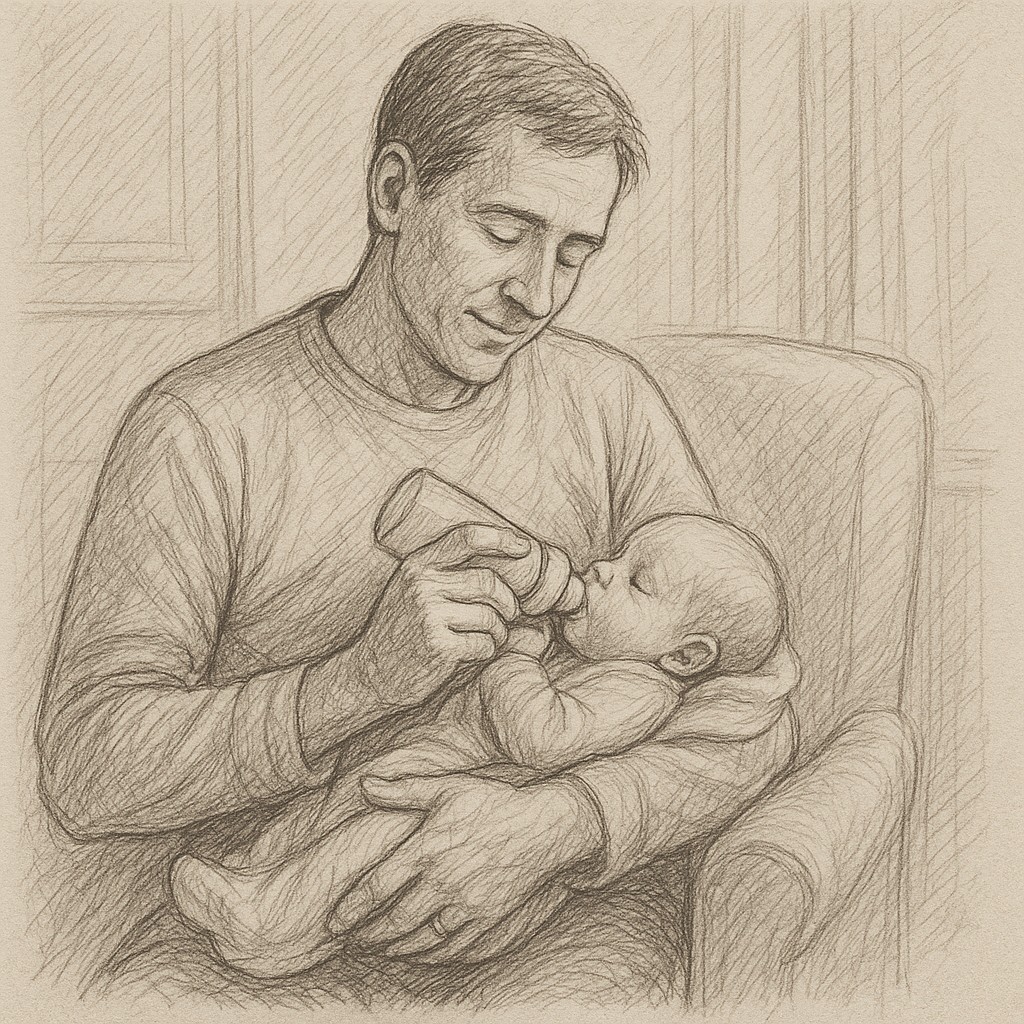
Little by little, I began to name those things I’d treated as normal: the sleeplessness, the vigilance, the constant scanning for danger. I started learning how to live with them without letting them run the show. I learned the awkward grace of asking for help. Sometimes that looked like talking to someone; sometimes it was just breathing through a bad night. I still stumble when I have to read out loud, still pause before signing something when eyes are on me. The body remembers, even when the mind tries to move on.
I started smoking young—too young—but it kept me calm. While other kids had friends or hobbies to lean on, I had cigarettes. They were my sedative, my small ritual of control. The smoke filled the gaps where comfort should have been. I’d light up behind the shed or on the walk to school, and for a few minutes, the world would quiet. My heartbeat would slow, the noise in my head would ease, and the fear that sat in my chest like a live wire would finally go still. I didn’t smoke to look tough; I smoked to survive. Each puff felt like a pause, a small pocket of calm I could carry anywhere. Over the years, smoking became more than a habit—it became the only friend that never asked questions, never judged, never left.
When I finally stopped after thirty-odd years, it felt like losing that friend. The silence that followed was brutal. I’d built so much of my life around that ritual—lighting one in the car before facing a crowd, another after a rough conversation, another late at night when the dreams were too sharp. Without it, everything felt raw again. My nerves were exposed. I remember thinking, life isn’t worth living without them. That’s when the depression hit hardest—like a wave that had been waiting just offshore. Ten years ago, I started medication for depression, and it steadied me in ways I hadn’t known were possible.
The medication didn’t erase the past or make the words vanish, but it softened the edges of every day. The panic that used to sit in my chest like a fist loosened its grip. Suddenly the long waits in bed didn’t feel so endless. The nights were still hard sometimes, but the fear stopped dictating every hour.
That small shift made room for bigger changes. I became the founder and chairman of a men’s mental health group—Blue MOTO—focused on rebuilding social connections. It grew from a simple belief that no one should have to face what I did, and no one should be taught to accept cruelty or silence as normal. We run community groups, morning teas, programs in schools, and meet-ups where people can simply talk without judgment. It’s not polished or clinical—it’s human. My role came out of what I once hated most about my life: the isolation, the idea that struggling made you less. Now I try to build spaces where struggle is just part of being alive.
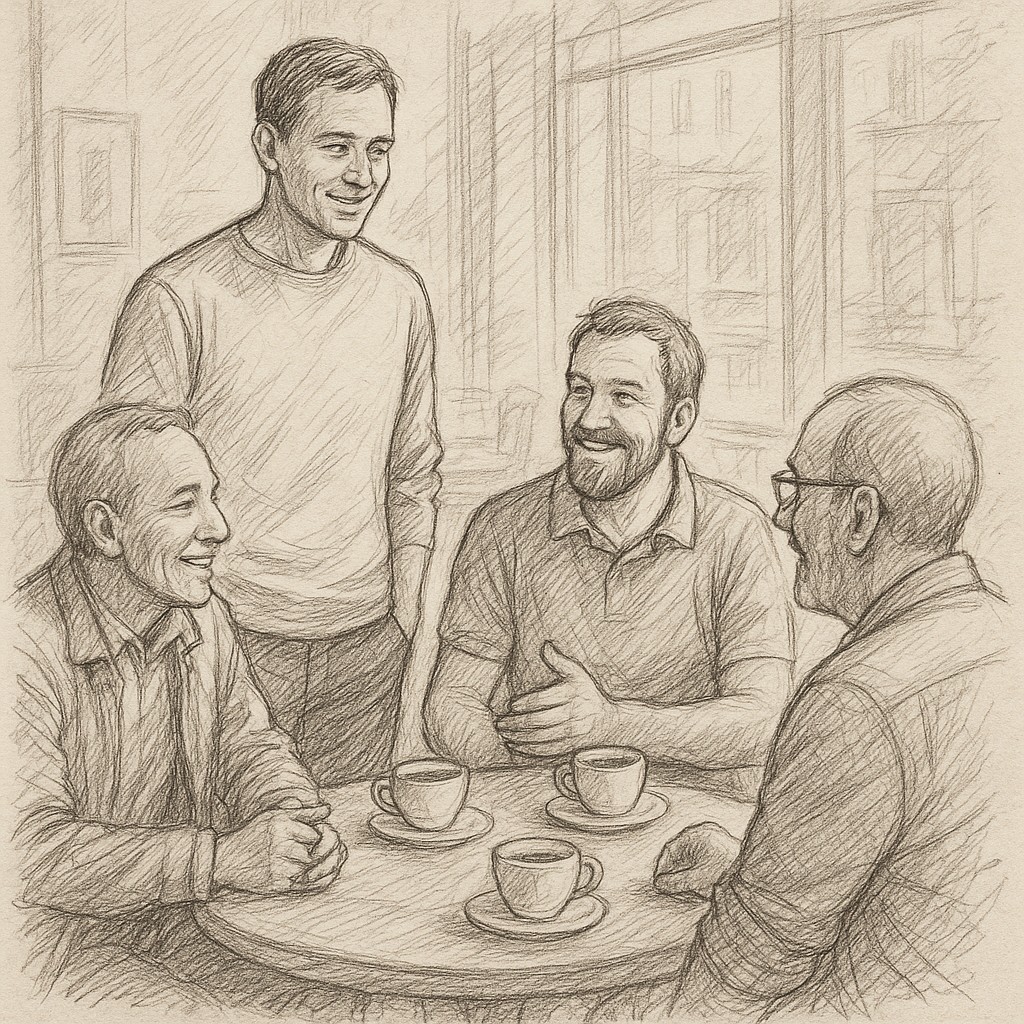
The aftermath isn’t neat, and it’s not done. Some days the “bad egg” voice still rings clear, and the old fear settles into my chest like it’s found its old seat again. Other days it’s softer, like a radio playing from another room. I know now that those words were never mine to keep—they were my father’s damage, not my measure. I’ve learned to talk back to that voice with proof: with facts, with kindness, with the steady presence of people who know me as I am. Sometimes it’s still hard. I stumble when I have to read out loud, hesitate before signing something, still feel the sweat behind my collar. But I answer that fear differently now—with patience, with help, with company.
I was never a people person, but I’ve grown to value the people I choose—my wife, my close friends, the men who show up week after week at Blue MOTO. Surrounding myself with people I trust has been the most radical act of all. It’s rewired the loneliness. It’s turned old wounds into connection. I still have bad days. The look my father used to give me flashes sometimes, uninvited, like a trick of the light. But now I have people around me who know that look, who understand the silence it left behind, and who stand with me in it.
The medication opened a door, but community pushed me through it. Our motto is simple: No fuss. No pressure. No textbook approach. We make space for people to breathe, to be seen, to stop pretending. The work isn’t polished—it’s real. We hold meet-ups, check on the quiet ones, and teach nothing fancy—just presence, patience, and kindness. I see transformation happen in small moments: a man who thought he had no friends laughing over coffee, someone’s shoulders dropping as they realise they don’t have to perform to belong. That’s what healing looks like to me—ordinary people finding each other again.
Blue MOTO keeps me honest. It reminds me that strength doesn’t mean silence, and that asking for help doesn’t make you less. It makes you human. My past still hums under everything, and the words “bad egg” still live somewhere in me—but they don’t define me anymore. I carry them differently now. Not as a curse, but as a reason—to make sure others never have to grow up thinking loneliness or cruelty is normal.
Closing Reflection
I’ve spent a lifetime learning how to live with ghosts. Some I was given before I could speak, others I picked up trying to make sense of them. For years, I thought survival meant silence—keeping my head down, doing the work, pretending the past didn’t still hum beneath the skin. But I know better now. Survival isn’t quiet; it’s steady. It’s getting up again when sleep has failed you, showing up when the old voices tell you not to bother. It’s letting people in, even when every instinct says stay hidden.
The fear never really left—it just changed its shape. It became a tremor in my hand, a pause before I speak, a familiar weight that walks beside me. But now, instead of running from it, I walk with it. It’s part of me, but not the whole of me. I’ve learned to give it a name and a seat, and then keep moving anyway. That’s what healing looks like—not the disappearance of pain, but the courage to carry it differently.
There are still nights when the dreams come, and mornings when I wake already tired. There are still moments when the words “bad egg” echo louder than they should. But I’ve built a life that answers them. A wife who looks at me with a steadiness that makes the world quiet. A son who grows up knowing love without fear. Friends who see the man behind the story. And a community—men who come together not to fix each other but to remind one another that being broken doesn’t mean being beyond repair.
If there’s one truth I’ve learned, it’s this: pain that is hidden will always find a way out. You can’t outrun it, smoke it away, drink it down, or bury it under work. But when you speak it—when you lay it down in the open—it starts to lose its power. That’s what Blue MOTO is about. It’s not therapy or treatment—it’s proof that connection heals what isolation cannot. Every conversation, every shared silence, every laugh that cracks open after years of quiet—that’s where repair begins. I used to think my father’s words would be the final sentence of my story. But they’re not. The story didn’t end with his voice. It carried on in mine. And now, every time I speak, or listen, or help someone else stand a little taller, I write over those words. Not with rage, but with something stronger—understanding. I am not the sum of what was done to me. I’m the sum of what I chose to build afterward. And if my story does anything, I hope it reminds someone else that they’re not a bad egg either—that they were never broken, just waiting to be believed in.